Foluso Akin- Ige

Foluso is the first member of SMPD, helping to start the lab in August 2022. Her research sits at the intersection of smart materials, drug delivery and sustainable formulation design with a focus on facile, sustainable approaches to engineering smart and responsive gels/hydrogels for enhanced stability and controlled delivery of active ingredients (e.g drugs, proteins/peptides, fragrance molecules, etc) in a wide range of applications.
Current research projects
- Biopolymer-based Injectable, Self-healing hydrogel for delivery of skin peptides
- 3D Printable Stimuli-responsive Gels
Contact information
Maria Calderon Vaca
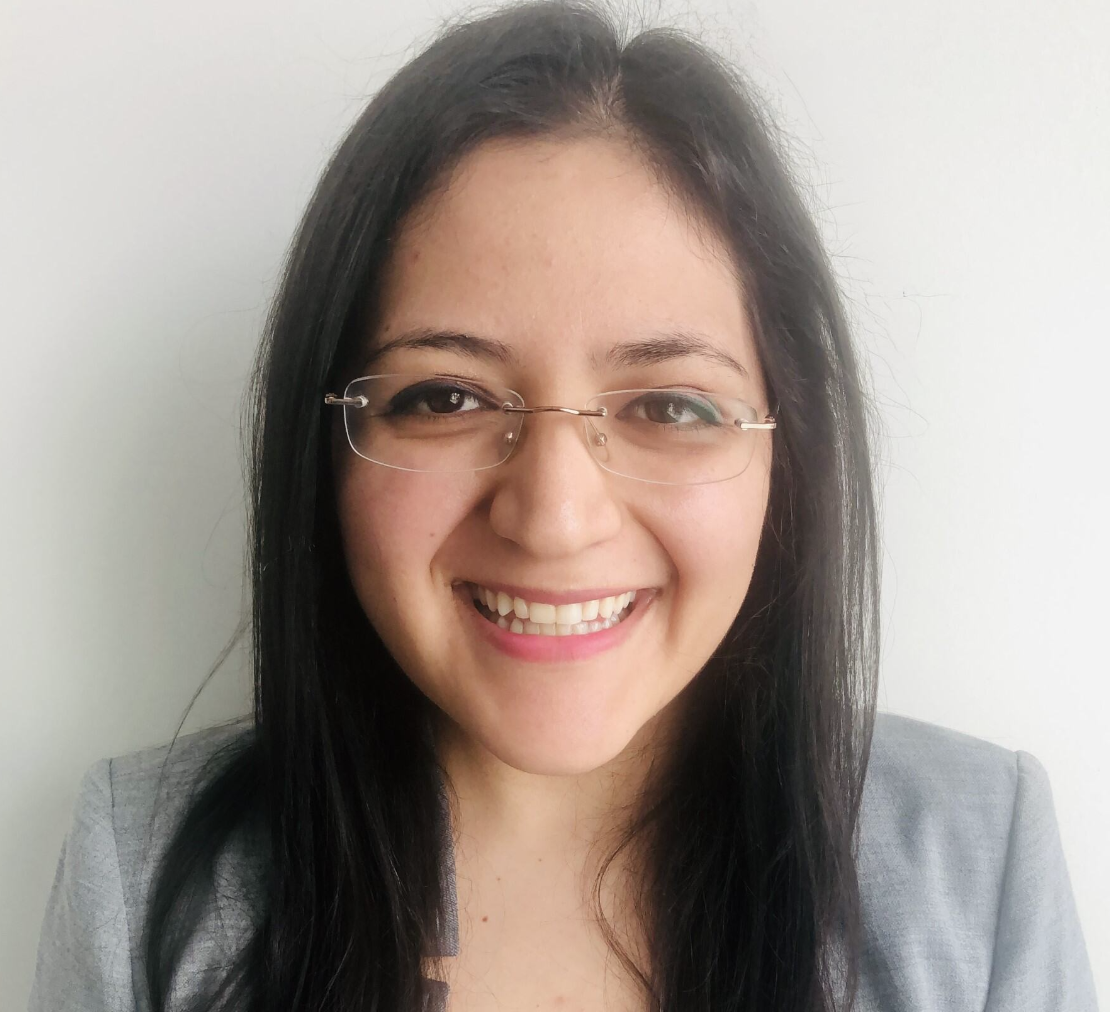
Maria joined SMPD in August 2024. Leading our biopharmaceuticals team, Maria's research focuses on understanding protein interactions in biopharmaceutical products, as well as in food science and consumer products. Applying this knowledge to predict formulation properties and optimize key performance attributes.
Current research projects
- Machine Learning Guided Stable Biophamaceutical Formulation Design
- Optimizing Monoclonal Antibody Strucutre and Dynamics Through Formulation Variables
- Next-Generation Plant-Based Food Formulations
Contact information
Email: mdc298@miami.edu
LinkedIn: https://www.linkedin.com/in/maria-calderon-vaca/
Mythri Adepu

Mythri joined SMPD in August 2026. As a Ph.D. student in Chemical Engineering, her research focuses on understanding how interfacial properties influence ocular-surface interactions and ocular retention. Her work investigates surface tension, dynamic surface tension, wettability, spreading behavior, and interfacial viscoelasticity to understand their role in tear-film interactions and resistance to removal. The goal of her research is to establish relationships between interfacial properties and ocular retention to support the rational design of ophthalmic drug-delivery systems.
Current research projects
- Interfacial Characterization for Ocular Retention
- Dynamic Surface and Interfacial Property Characterization Using Tensiometry
Contact information
Email:axa5304@miami.edu
LinkedIn: https://www.linkedin.com/in/mythri-ad/
Kiandokht Neshati

Kiana joined the SMPD Lab in August 2026 as a PhD student in Chemical Engineering. Her research focuses on the development and characterization of smart and responsive soft-material systems for topical applications. Her current work explores multifunctional sunscreen formulations that combine effective UV protection with stimuli-responsive behavior. Her research interests include nanoemulsions, ROS-responsive hydrogels, thermoresponsive polymer systems, rheology, and controlled delivery.
Current research projects
- Biopolymer-based Injectable, Self-healing hydrogel for delivery of skin peptides
- Development of Multifunctional Stimuli-Responsive Sunscreen Formulations
Contact information
Usoshi Mohsin

Usoshi Mohsin joined SMPD Lab in Fall 2026, as part of the Biopharmaceuticals subgroup. Their research uses physics-informed machine learning, combined with experimental biophysics, to understand and predict self-association and high-concentration viscosity across a range of antibody formats including monoclonal, bispecific, and multispecific antibodies. Rather than relying on interaction strength alone, this work investigates how pairwise molecular interactions and surface geometry govern whether antibody self-association remains limited or propagates into the extended networks responsible for elevated viscosity, with the goal of identifying when simple interaction-strength descriptors are sufficient to predict formulation behavior, and when structure-sensitive, pair-aware descriptors are required instead.
Current research projects
- Developing physics-informed machine learning models for antibody self-association and viscosity across monoclonal, bispecific, and multispecific formats, using pairwise molecular interactions rather than interaction strength alone.
- Using dynamic light scattering, rheology, and biophysical characterization of model proteins and antibody surrogates under matched solution conditions to guide stable, high-concentration formulation development.
Contact information